
The Boy at the Back of The Class
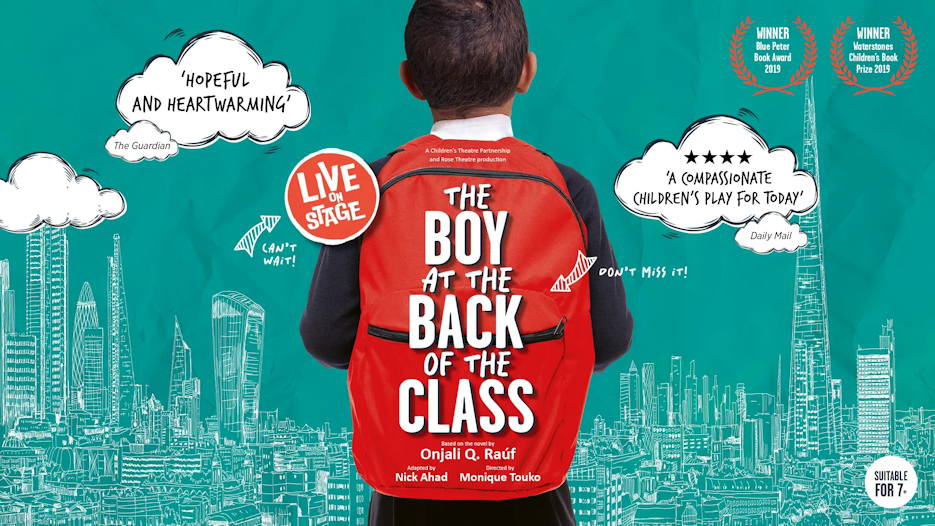
A Children’s Theatre Partnership and Rose Theatre production
Age Recommendation: 7+
The Boy at the Back of The Class Tickets
Sorry, there are no tickets for The Boy at the Back of The Class in London available at the moment. This maybe due to one of the following reasons:
- - The Boy at the Back of The Class in London tickets are currently not on sale.
- - The event has sold out.
- - Details have not yet been announced for The Boy at the Back of The Class in London.
- - The event may have been cancelled.
- - The event has been and gone.
Join our free mailing list for
updates about this event
The Boy at the Back of The Class ON TOUR
Our review on The Boy at the Back of The Class
The Boy at the Back of The Class - Lowry, Salford - Wednesday 15th April 2026 by Andrea Horrocks
Our Rating
Onjali Q. Raúf’s award winning debut book, The Boy at the Back of the Class is a beautiful and heartfelt story about curiosity, hope and the power of kindness. The author’s passion and authenticity really stands out as we are guided through events from the eyes of a child. Onjali Q. Raúf does not shy away from the difficult realities and challenges of the world, she cleverly portrays these darker aspects in a positive and uplifting way, making them relatable and understandable for a younger audience as well as adults.
Onjali Q. Raúf has been awarded an MBE and is also the founder of two NGO’s – Making Herstory (tackling the abuse and trafficking of women and girls in the UK) and O’S Refugee Aid Team (which raises awareness and funds for frontline refugee aid organisations). She is of British Bangladeshi heritage born in Newcastle and raised in London and The Boy at the Back of the Class clearly draws on her experiences growing up along with her experience delivering emergency aid convoys for refugee families. The Boy at the Back of the Class is a Sunday Times Best Seller, winner of the 2019 Blue Peter Book Award for Best Story and overall winner of the Waterstones Children’s Book Prize in 2019.
With this background, the author’s experiences and with the amazing comments I have already heard about this production, it is no surprise that my son and I were very excited to watch this theatre adaptation of The Boy at the Back of the Class at the Lowry, to see for ourselves how the characters would be brought to life on the stage.
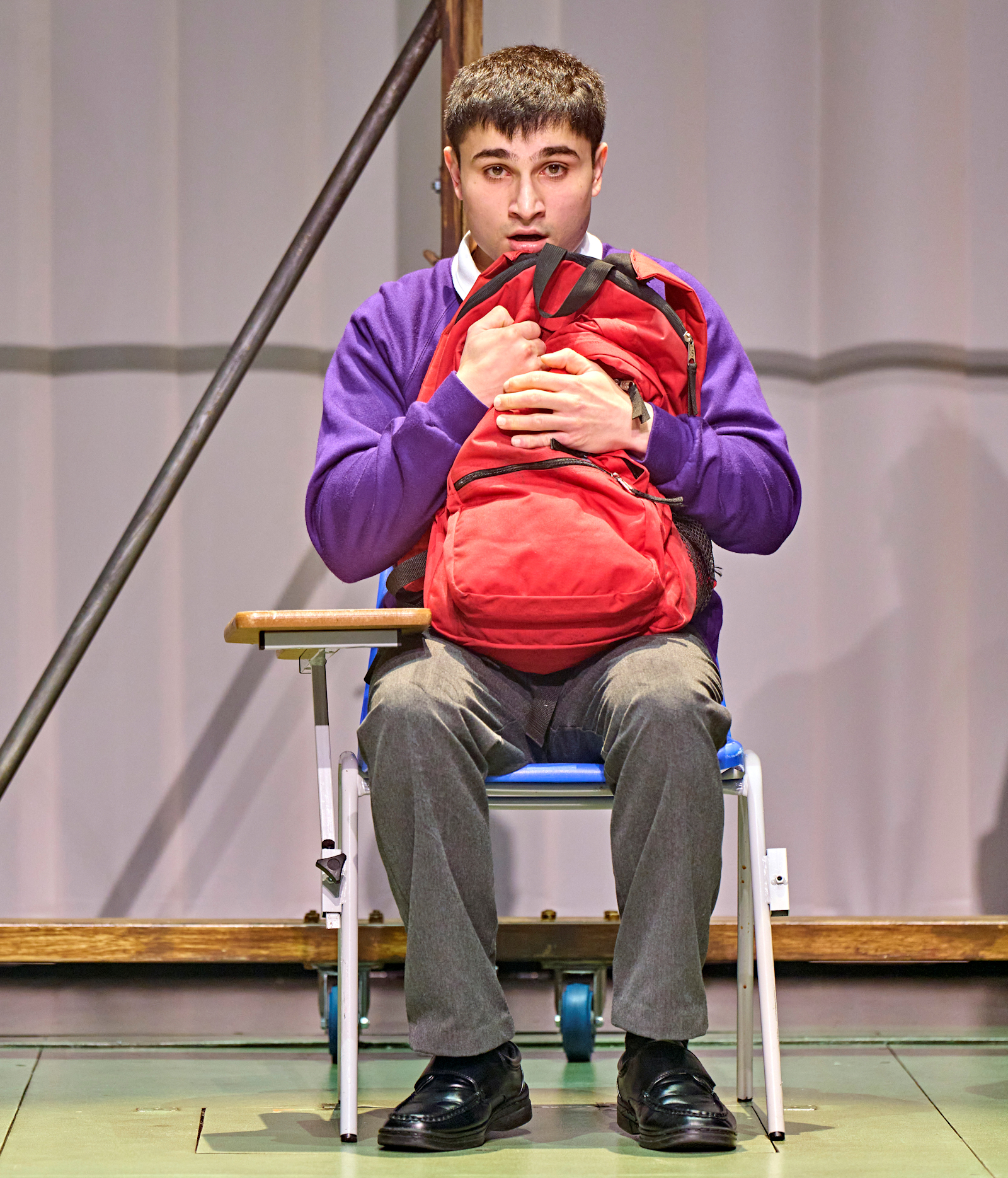
As in the book the story is mostly told from the perspective of Alexa, a 9 year old girl who, after returning to class after the weekend finds that on this day, something is different, the chair at the back of the class which was usually empty, now has a boy sitting in it. At first glance the boy appears different to the children, he is treated differently by the teacher and doesn’t speak. He is introduced to the class as Ahmet and from that moment the children’s adventure begins, driven by curiosity and kindness.
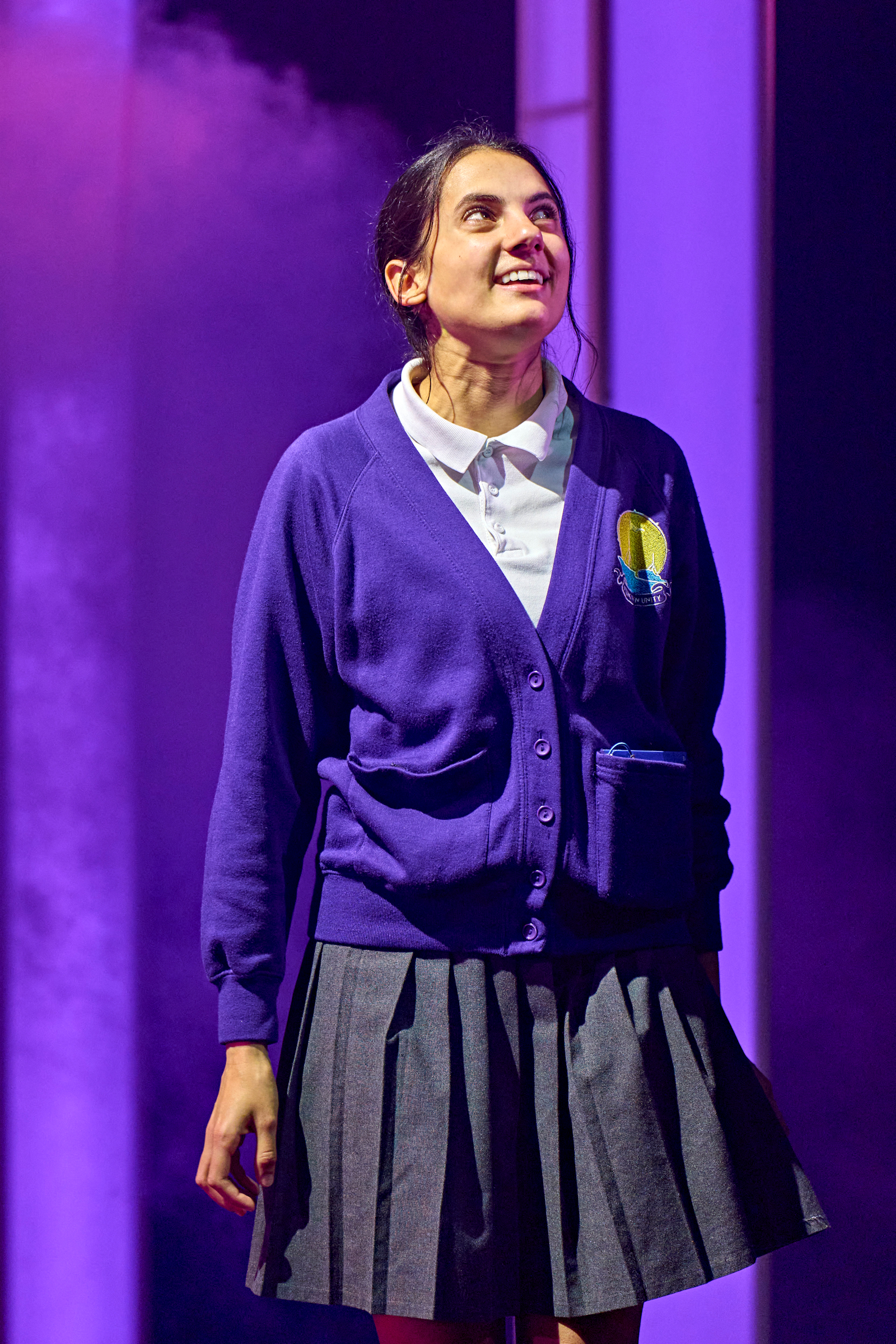
Ahmet is a refugee from Syria, he and his family fled from the war in fear, but Ahmet has now sadly been separated from his family, from everyone and everything he knows. Ahmet is alone, is very quiet as he doesn’t yet understand English, is trying to make sense of his new surroundings and doesn’t have any friends. Alexa in contrast has a close group of friends - Michael, Josie and Tom – she help her through her own struggle with grief and loss. Alexa is inquisitive and determined to welcome Ahmet into her friend group, she and her friends work hard to communicate with him and soon decide they must do everything they can to try to reunite Ahmet with his family. This is the beginning of their journey, filled with kindness, hope and courage. A journey which, through the eyes of children, reminds us all about the importance and power of compassion, understanding and friendship in our society.
This Boy at the Back of the Class has been adapted for the stage by Nick Ahad and directed by Monique Touko. Together they guide us through this difficult and relevant topic with sensitivity, creating a positive, dynamic theatrical experience that helps the audience of all ages understand what it means to be a refugee.
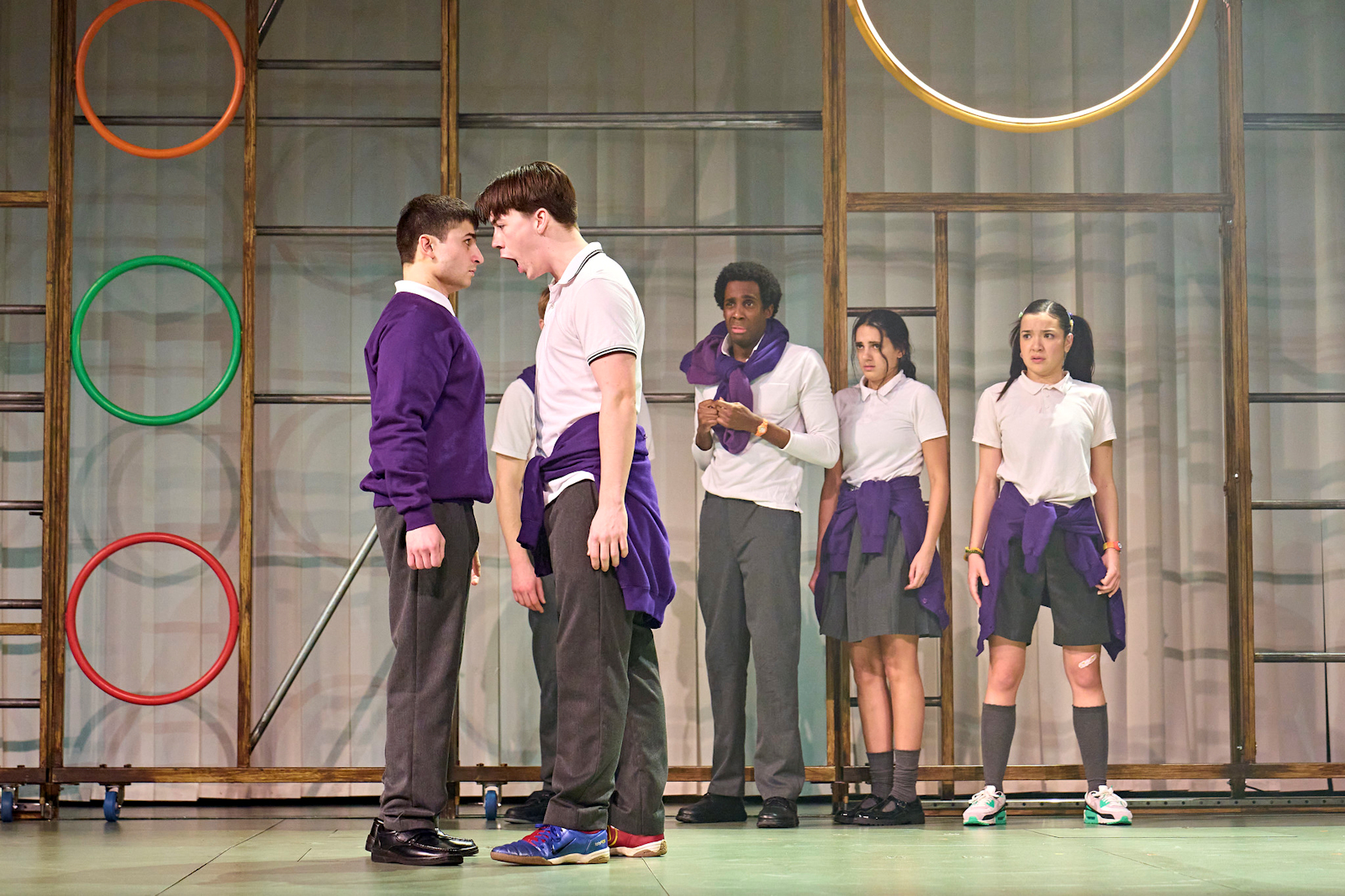
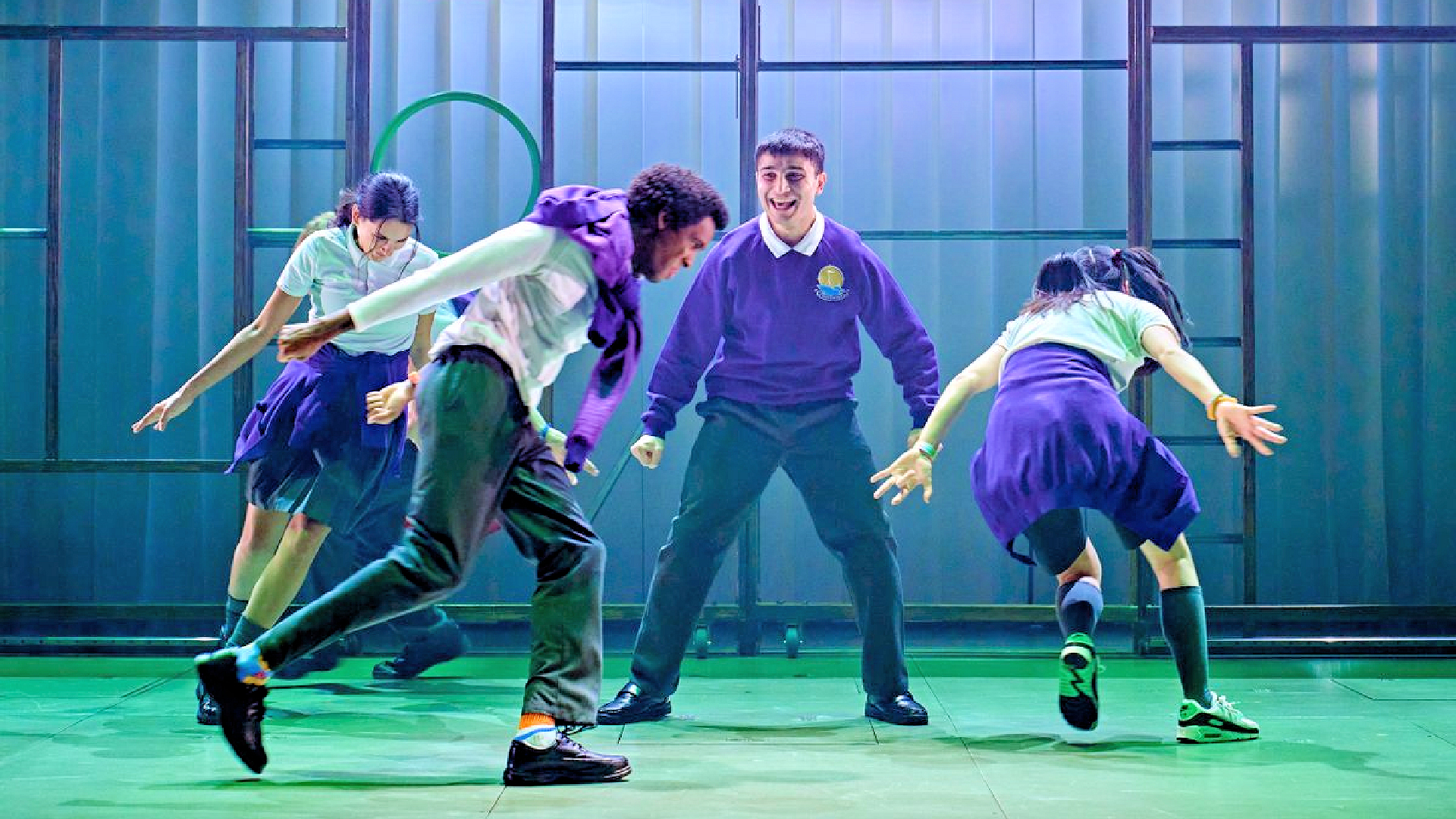
The opening scene is haunting, with the sea depicted through a large sheet waved around the stage to represent the frightening sea crossings many refugees must make. This powerful moment is quickly contrasted by a sudden change of lighting and sound, an explosion of music, dance and energy and we are transported to a classroom full of noisy, joyful and playful children. This happy safe space contrasts with the opening scene, effectively setting the tone for the production.
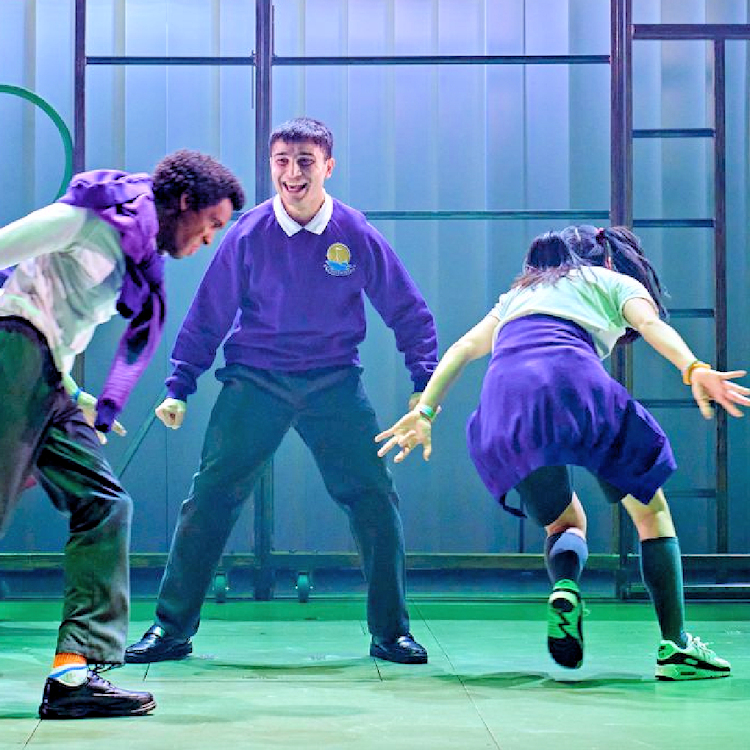
Throughout the play there are many calm, introspective moments that offer opportunities for reflection and allow the audience, particularly the children to interact and think. These quieter moments are balanced with bursts of impromptu dance which lift the energy on stage again, project the children’s sense of joy and innocence and heighten the overall impact of the performance.
There are so many beautiful moments as we watch Alexa and her friends bonding with each other and with Ahmet. Through their actions we see what it means to embrace differences, to stand up to bullies and to be guided by kindness not fear. One stand out moment comes when the friends invite Ahmet to play football. There is no actual football, but the audience imagines the ball as it is kicked back and forth across the stage. This is a beautiful way to represent the power of imagination and how children can create connections through play.
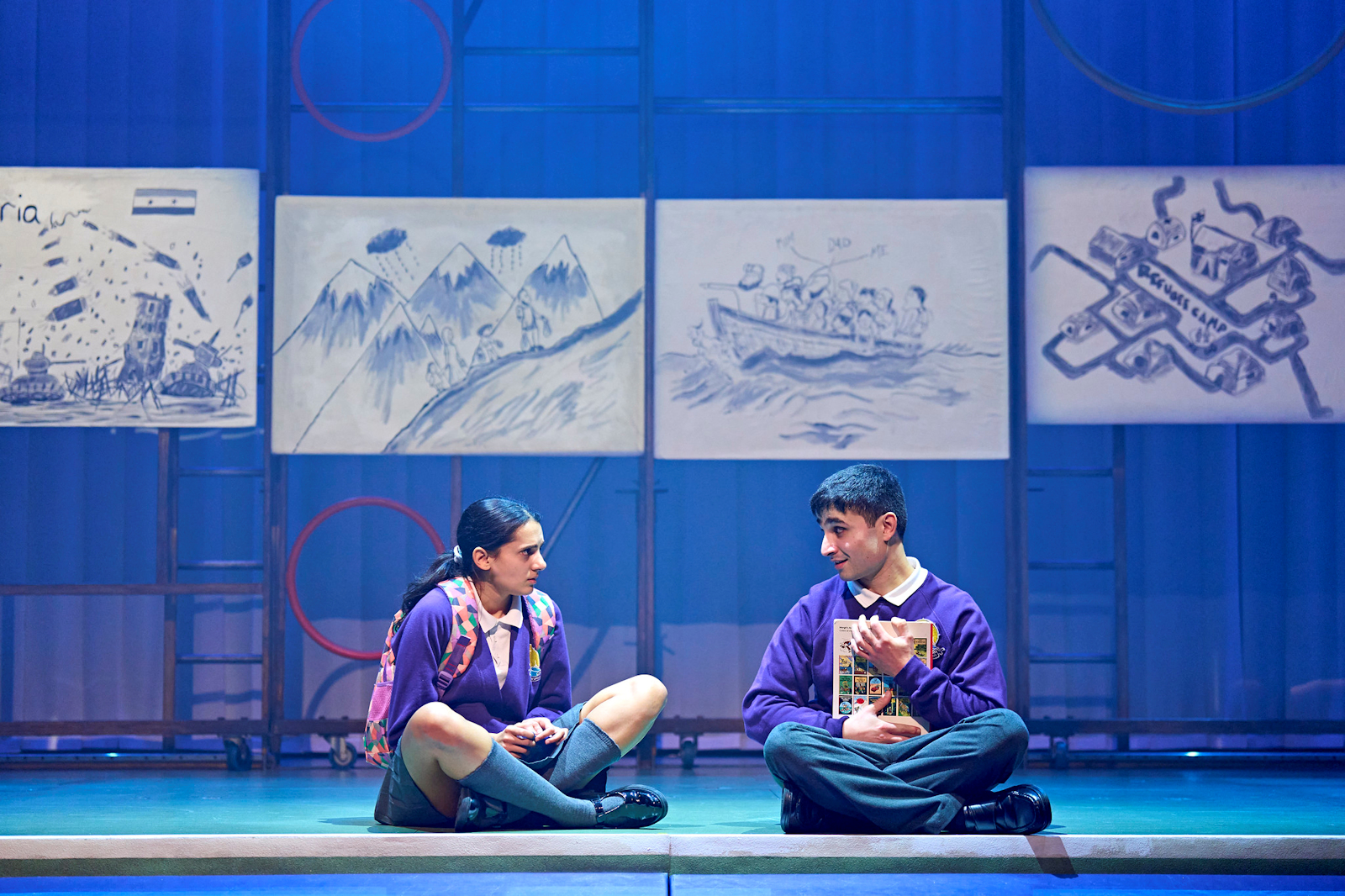
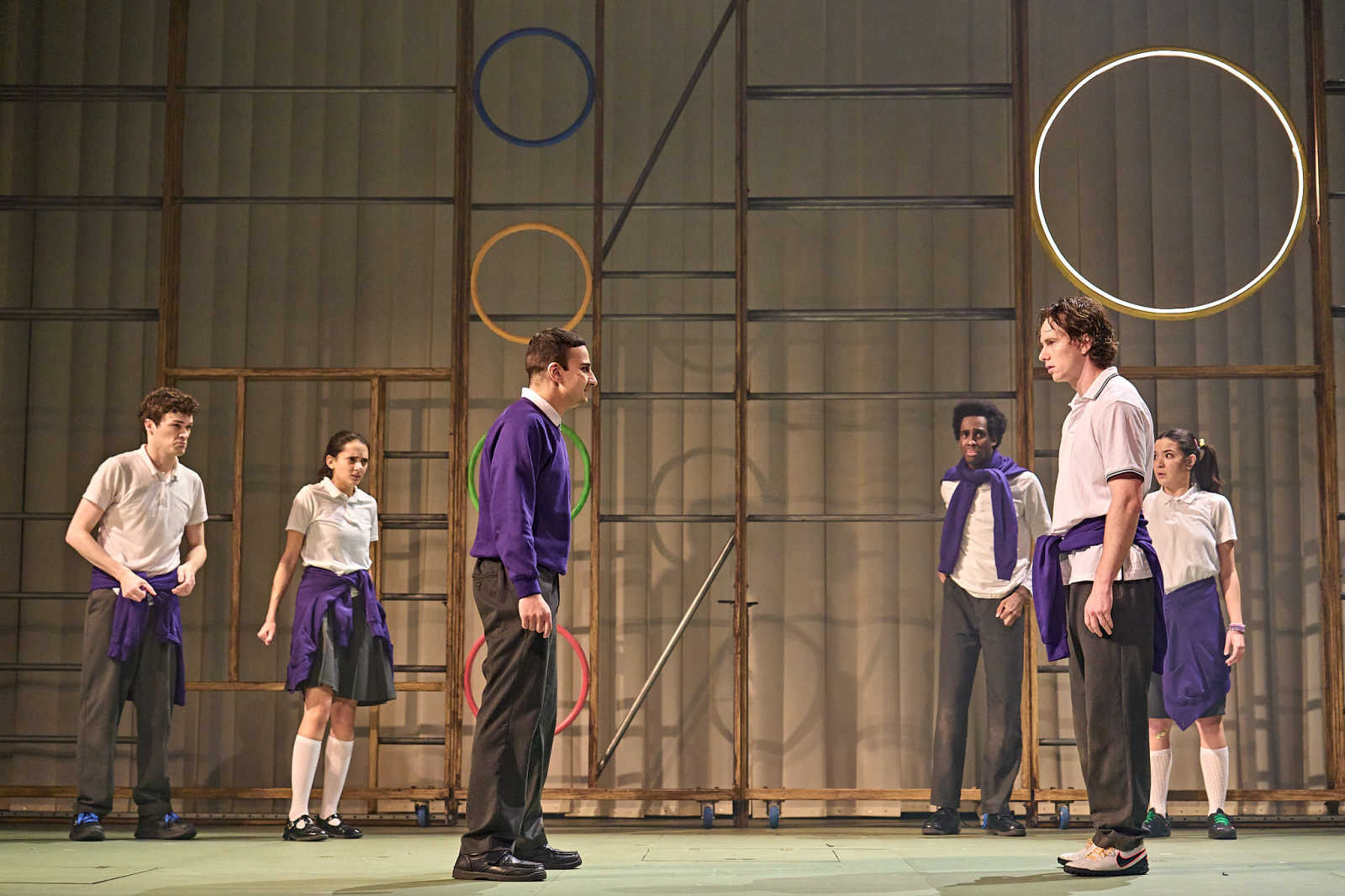
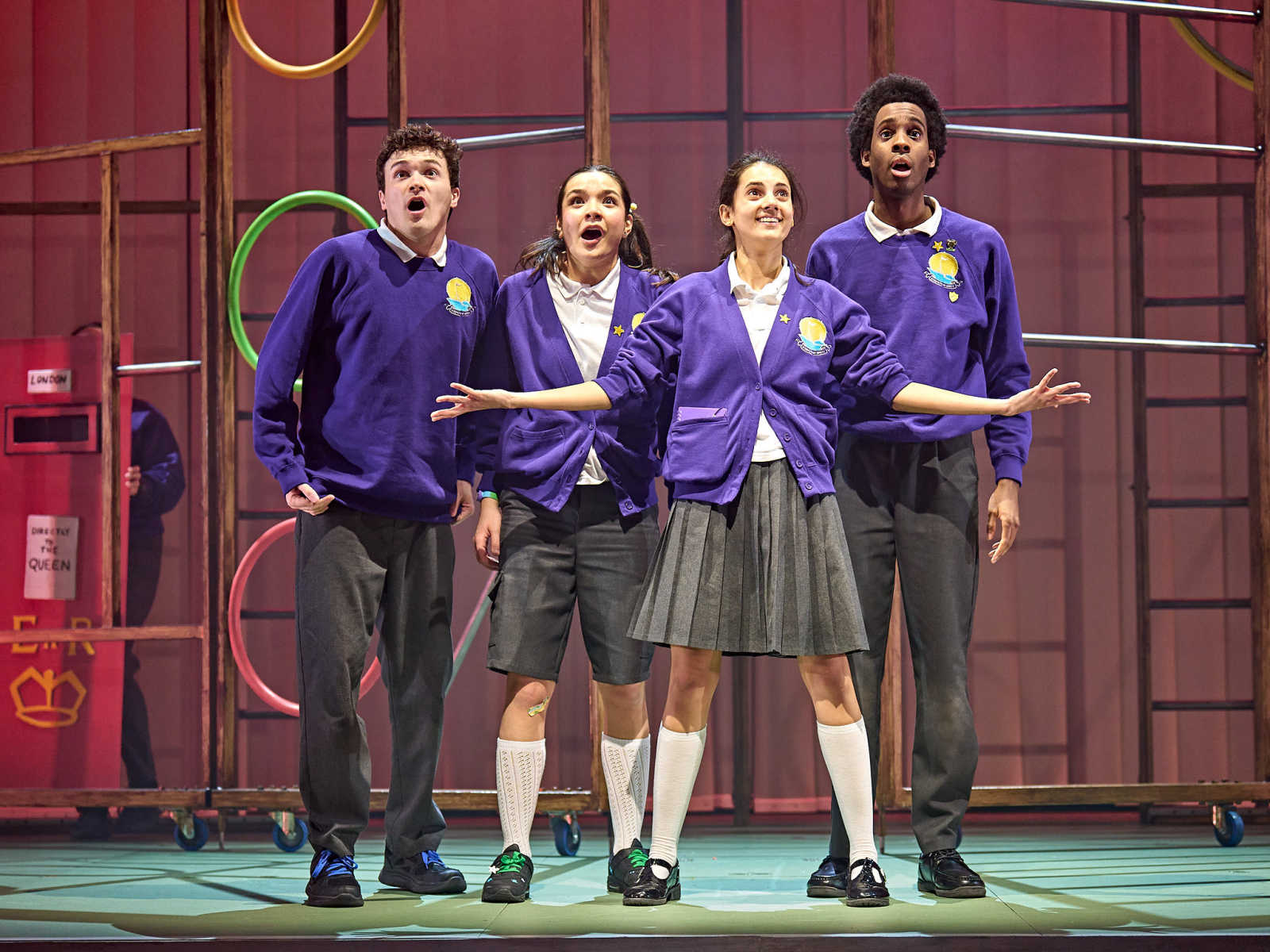
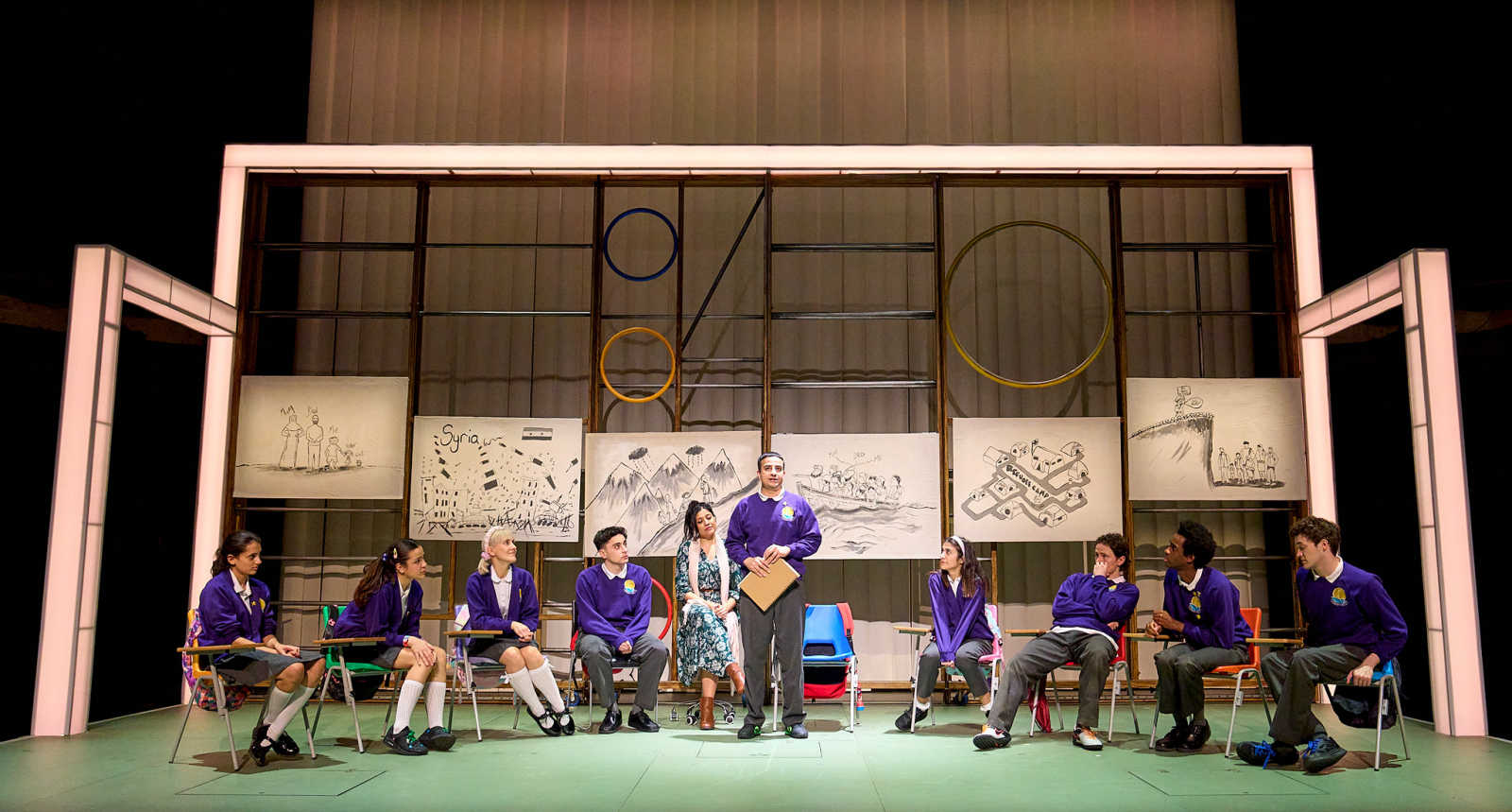
The set, designed by Lily Arnold, features a cleverly constructed frame which is reminiscent of the ones found in primary school halls and used in PE lessons. Made up of geometric shapes it effectively transforms into a wide range of settings with ease and the audience is effortlessly transported from the busy school room to the quiet of Alexa’s home to Buckingham Palace. The children often quickly scramble up and down the frame highlighting the energy and vitality of the children. Ryan Day’s lighting and Giles Thomas’ sound design work seamlessly together to establish the mood. In brief, striking moments the audience is transported to Syria, offering a glimpse into a world so different from our own. Though these moments are short, they leave a powerful and lasting impression.
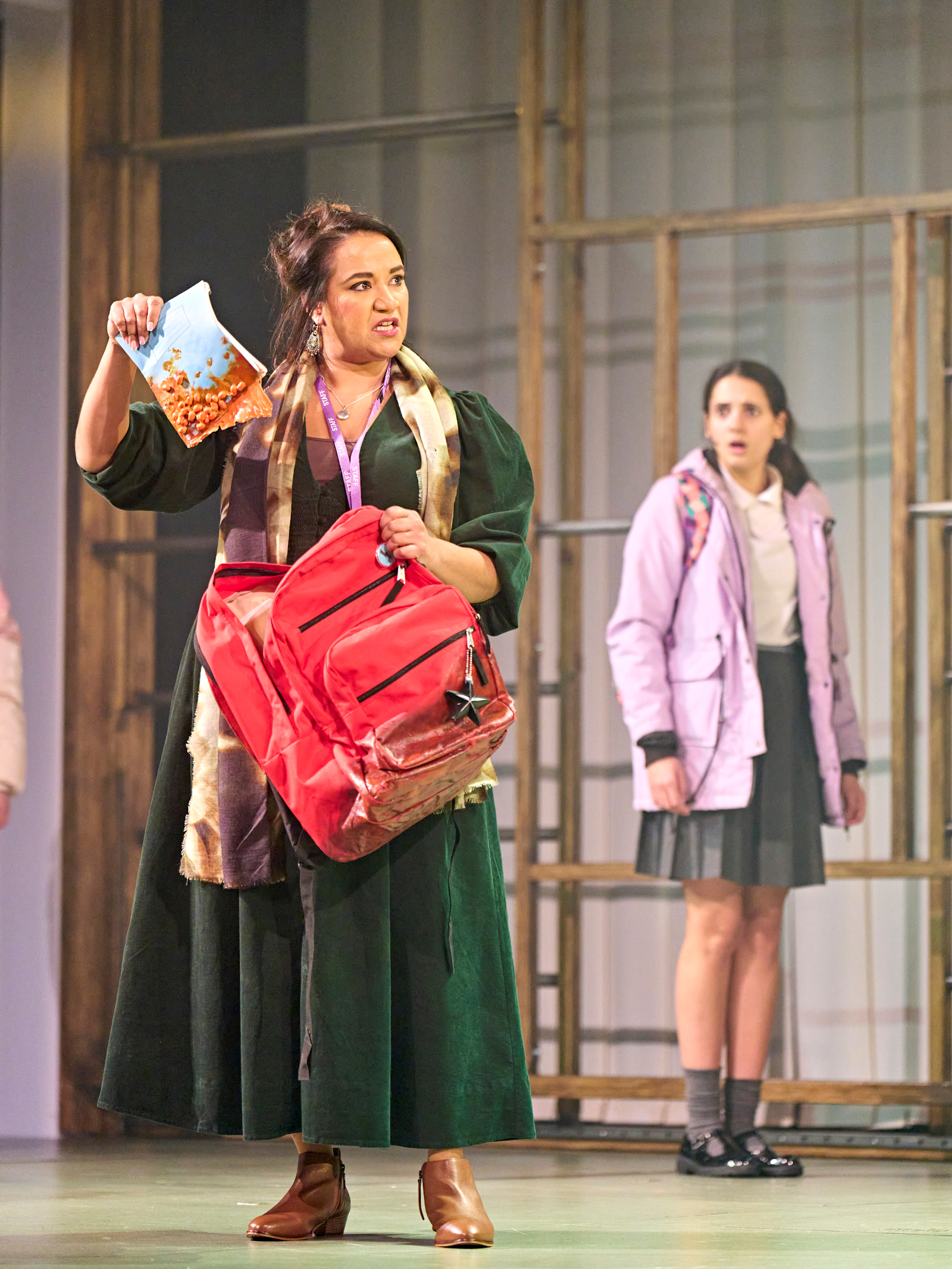
Sasha Desouza-Willock (Disruption, Jugantor) plays Alexa pitching the nine-year-old character perfectly. She performs with heart and enthusiasm and she develops a strong connection to the audience from the outset as she speaks directly to us. She is fiercely inquisitive, highlighting the importance of questioning and the childlike need to understand the world. Alexa’s courage shines through in her portrayal.
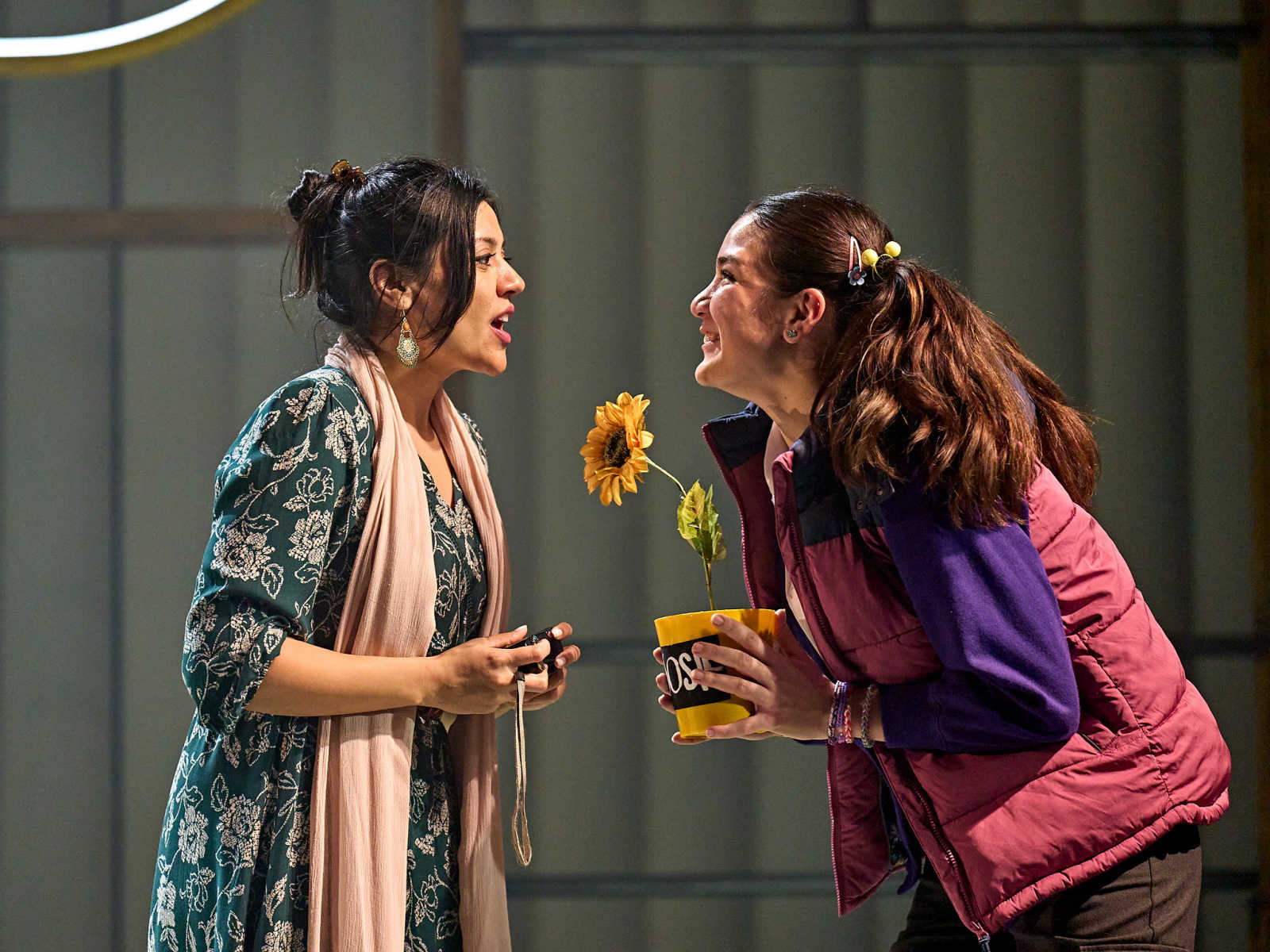
Serkan Avlik (Ostan, The White Rose, Bucket Fill) as Ahmet was captivating. Since Ahmet doesn’t speak in his early scenes, he must rely on body language and facial expressions to convey his emotions. This he does wonderfully, drawing the audience in so they can’t help but feel what he is feeling. This is particularly powerful at the end of the first half when his silence breaks in an emotional outburst which is truly heartbreaking. Natasha Lewis (Romeo & Juliet, The Boy in The Dress) plays both Mrs Khan, the teacher and Alexa’s Mum. Natasha plays both roles strongly yet gently, portraying nurturing and protecting characters who the children can trust, constantly emphasising the importance of kindness. Abdul-Malik Janneh (The Dumping Ground and The Gunpowder Plot), Jonny Warr (Chariots of Fire and?The Winslow Boy) and Petra Joan-Athene (The Elmer Adventure, Cancer B*tch) play Alexa’s close friends, Michael, Tom and Josie.
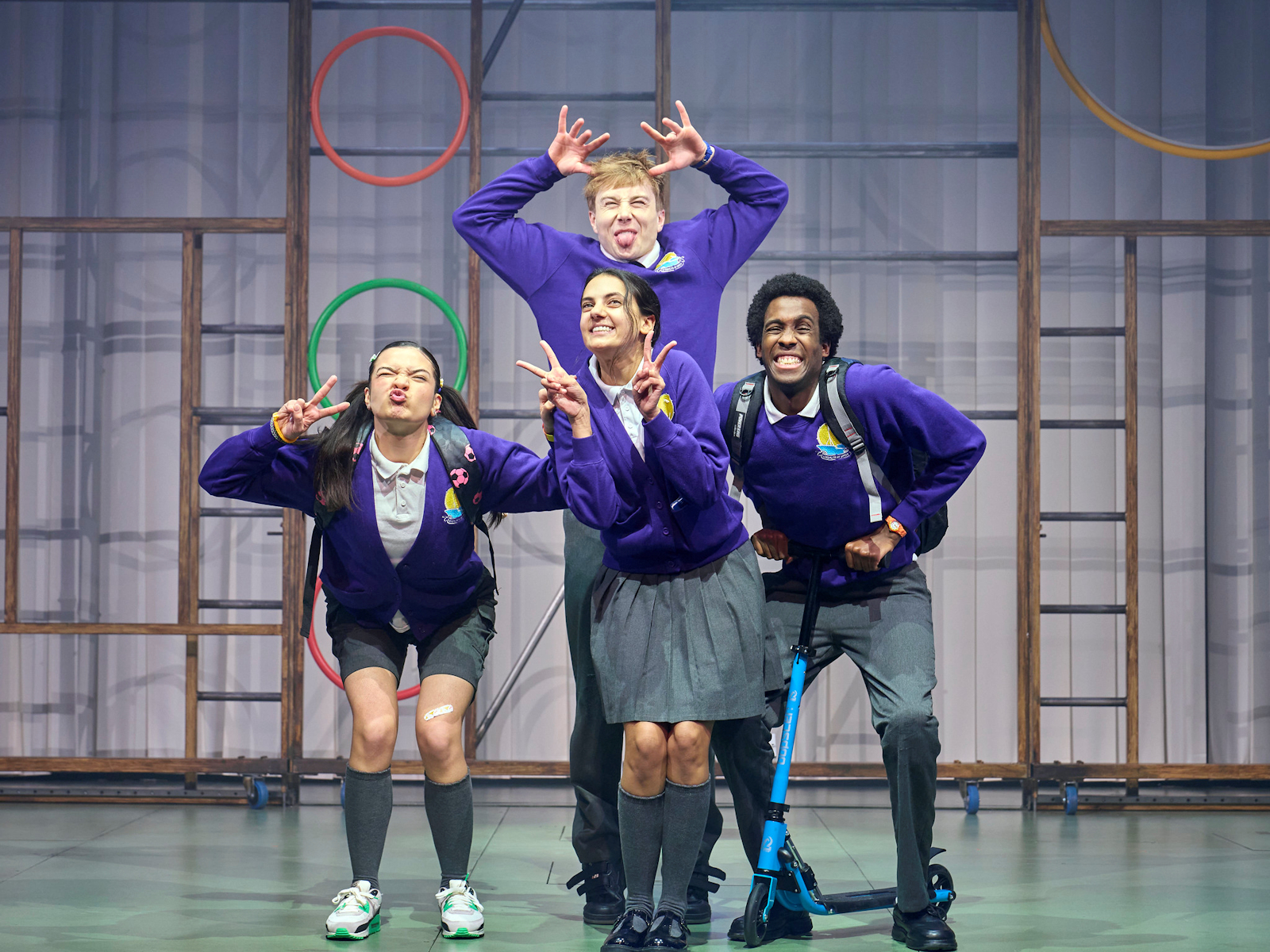
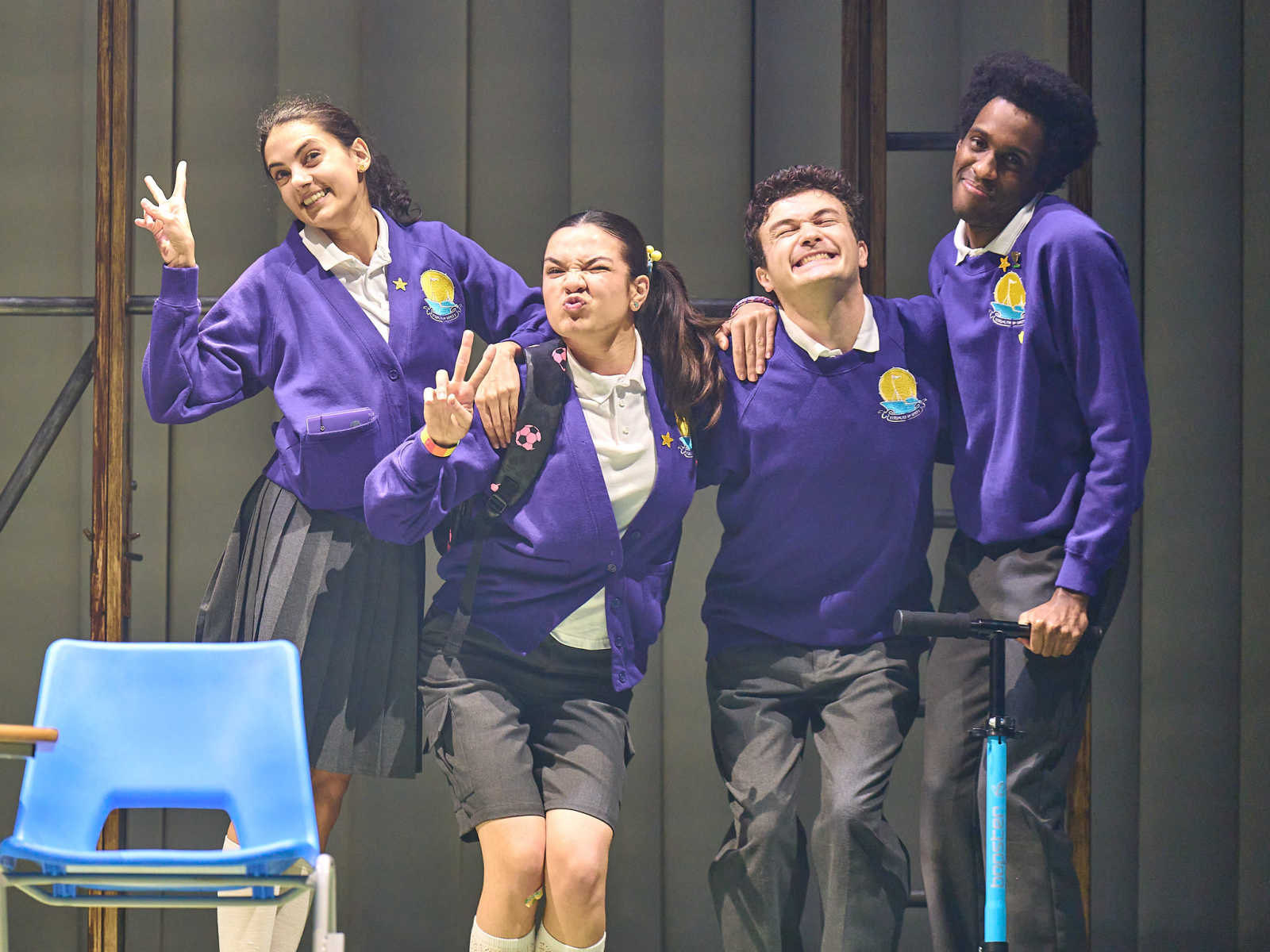
Their constant high energy gives joy and humour to the production. Their playful antics generate frequent laughter from both the children and adults in the audience and also highlight the strength of their friendships and connections. Max Jordan’s professional debut as Brendan the bully is strong and believable. He manages to be intimidating and forceful yet there is also a vulnerability to his character. Evie Weldon, Eleanor Patel and Fedrat Sadat switch effortlessly roles to enhance the story telling and interactions of the children with members of the public.
From the many questions I could hear being asked by children throughout the show it is clear this production offers a safe platform for discussion. It reminds us of the importance of embracing differences, of asking questions but also of taking the time to listen. We all deserve to feel safe and to have a home and as we are reminded by Mrs Khan, we can’t truly know what it is like to walk in someone else’s shoes, to feel their fear, their loss and their isolation but by asking questions and listening we may well become more empathetic and understanding.
The Boy at the Back of the Class is a powerful, impactful and immersive production. It tells a story of kindness, courage and belonging, full of heart and humour, reminding us how humanity can be found through friendship. It is a fast-paced production and at 2 hours long including an interval it will have no trouble keeping young minds engaged. Children are encouraged to take part in this journey of discovery alongside Alexa and her friends, exploring both the differences and shared connections between people and cultures. Although clearly aimed at younger audiences, this show serves as a reminder to us all about the importance of kindness and compassion in this turbulent world we live in, a poignant and deeply relevant message for audiences of all ages.
WE SCORE THE BOY AT THE BACK OF THE CLASS...
Our review on The Boy at the Back of The Class
The Boy at The Back of The Class - The Lowry, Salford - Tuesday 26th March 2024 by Karen Ryder
Our Rating
THE BOY AT THE BACK OF THE CLASS CELEBRATES COURAGE, FRIENDSHIP, UNDERSTANDING AND TOLERANCE
The Boy At The Back Of The Class is a multi-award winning children’s book that I personally adore and often reread so I can experience falling in love with it all over again. Author Onjali Q. Raúf is able to connect with the audience so beautifully because she writes with a higher purpose, an authenticity and a passion that shines through on every page. Awarded an MBE, Raúf is also the founder of two NGO’s – Making Herstory (tackling the abuse and trafficking of women and girls in the UK) and O’S Refugee Aid Team (which raises awareness and funds for frontline refugee aid organisations). The Boy At The Back Of The Class draws on her personal experience of delivering emergency aid convoys for refugee families in Calais and Dunkirk. It is full of humanity, genuine heart, wit, and tear-jerking moments, all of which culminate to grant us hope and faith for future generations.
This glorious children’s book deservedly won the Blue Peter Best Story Award and The Waterstones Children’s Book Prize for its truthful and age appropriate approach to themes that many adults struggle to process. It didn’t patronise its young readers by trying to hide the harsh elements of the world, or by glossing over them. Instead, it recognised that our younger members of society are faced with exactly the same situations that we are as adults, and The Boy At The Back Of The Class helps them navigate this chaos through the open and optimistic eyes of a child in an honest and uplifting way. As our narrator Alexa merrily guides us through the joys of the first day back of her school term and her friendship group, it’s not long before something is different. The empty chair at the back of the class has been filled. No one knows who this stranger is. More mystifying to the class is that this stranger named Ahmet doesn’t speak English, he seemingly gets special treatment by being pulled out of class, and he never smiles.
But Alexa’s curiosity grows the better of her, and as she discovers the truth behind this stranger, and works hard to create a connection with the isolated Ahmet, she soon discovers that not everyone feels the same. Alexa is lucky as she has three best friends in Tom, Josie, and Michael, and it seems unfair that Ahmet has none. Not even a family. For Ahmet is a Syrian refugee who has fled a very real war and been separated from everyone he knows. Alexa is determined to help Ahmet reunite with his family and so ‘The greatest idea in the world’ is born, which takes a band of enthusiastic and pure hearted children on the journey of a lifetime. They teach us the importance of friendship, kindness, acceptance and tolerance, and how simple things could actually be, in a messy world that doesn’t always make sense. We all deserve a safe place we can call home, and The Boy At The Back Of The Class reminds us that this is something most of us simply take for granted.
Adapted for stage by Nick Ahad, and directed by Monique Touko, we are taken from the carefree world of the classroom and the playground to the hauntingly heartbreaking scenes at sea where Ahmet’s childhood is stolen and his world is turned upside down. Swelling sheets waft with vigour across the stage to bring us the turmoil of his journey, whilst back at school, we see Ahmet start to reclaim his childhood through games of football. These are performed without a ball, we simply imagine its presence, and details like this stunningly reflect the powerful magic of childhood and our ability to dream, imagine, and believe that things can be whatever we wish them to be. This was reflected in the young audience, who pretended to catch the invisible ball when it was kicked out into the audience. Impromptu moments of magic include bursts of dance, music, and glee from the youthful classmates. Bus journeys and taxi rides are brought to life with nothing more than a chair or the existing scenery, and a gorgeous moment comes into play where Alexa dances a happy dance with the memory of her dad via a silhouette.
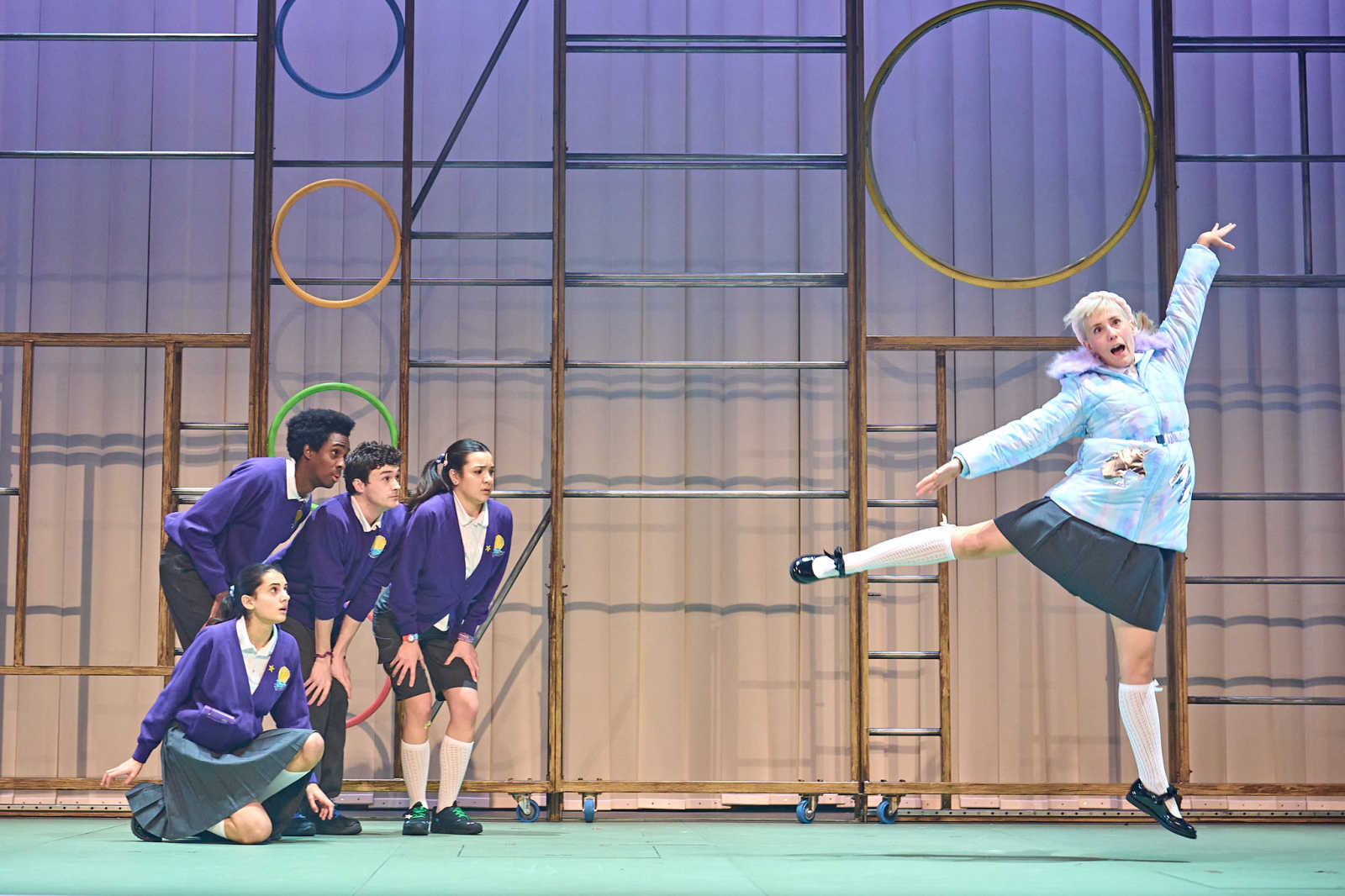
Monique Touko keeps the element of the narrator (Alexa) telling the audience the story, as is done in the book. I applaud this keepsake for the whole success of the novel is that it is presented to us through the eyes of a child, and this ensured that my adult brain stayed on track with this pure perspective. Then, in a tender twist, Alexa stops the narration when Ahmet finds his voice, ultimately handing him back ownership of his story. Ahmet speaks directly to us, for we are the ones he embraces as those who can listen to him and understand his story. The decision was also made to have adults playing the children. Understandable from a logistical viewpoint, but it did fill me with a little trepidation for a few reasons. Adults playing children can often become cringe worthy as they often turn them into stereotyped bundles of youthfulness, with fake baby voices and exaggerated movements and facial expressions. Also, as already mentioned in my praise of keeping the narration element to ensure we view this from the child’s viewpoint, we risk losing that and taking away the child’s vantage point by having an adult playing them and doing the performance on their behalf.
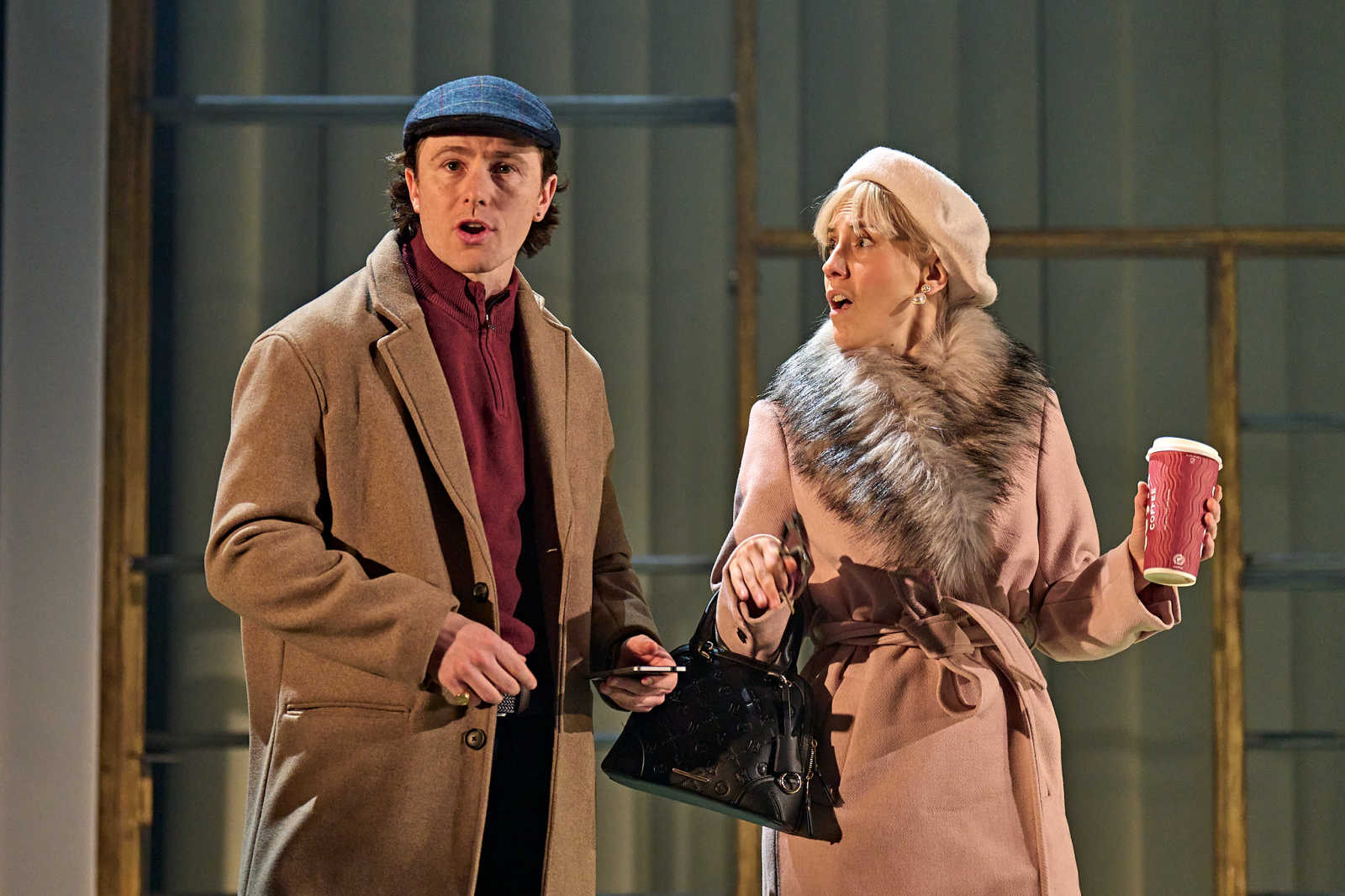
As the show started, I did become a little disappointed as the children were played very young, far younger than their intended age and it felt patronising to this young audience. You could feel the squirming from the school children in the audience and understandably so because nine-year-olds simply don’t talk in the manner they were presented. It seemed to be a large lapse in judgement. However, we soon learnt that Ahmet wasn’t presented like this at all, and as the story developed, the other performers subtly reduced this exaggeration too. It was actually quite a clever choice because what it did was present a world where children can be children, and so were childlike, verses the horrors Ahmet had faced, and slowly but surely, as their understanding of Ahmets world grew and Ahmet was starting to experience friendship and learn how to play again, they all met in the middle.
This production is full of beautiful moments that seek to melt our heart. Watching a group of friends support Alexa on her mission to help another child as they wander the unfamiliar streets of London is stunning to watch as an adult, and probably full of wonder and adventure for the younger audience members, who let’s face it, is who this production is truly aimed. And Alexa’s determination to find a pomegranate for Ahmet as a gift just serves to remind us that what seems ridiculous to adults is the most important thing in the world to children, and perhaps it is us who has it wrong and we should take heed.
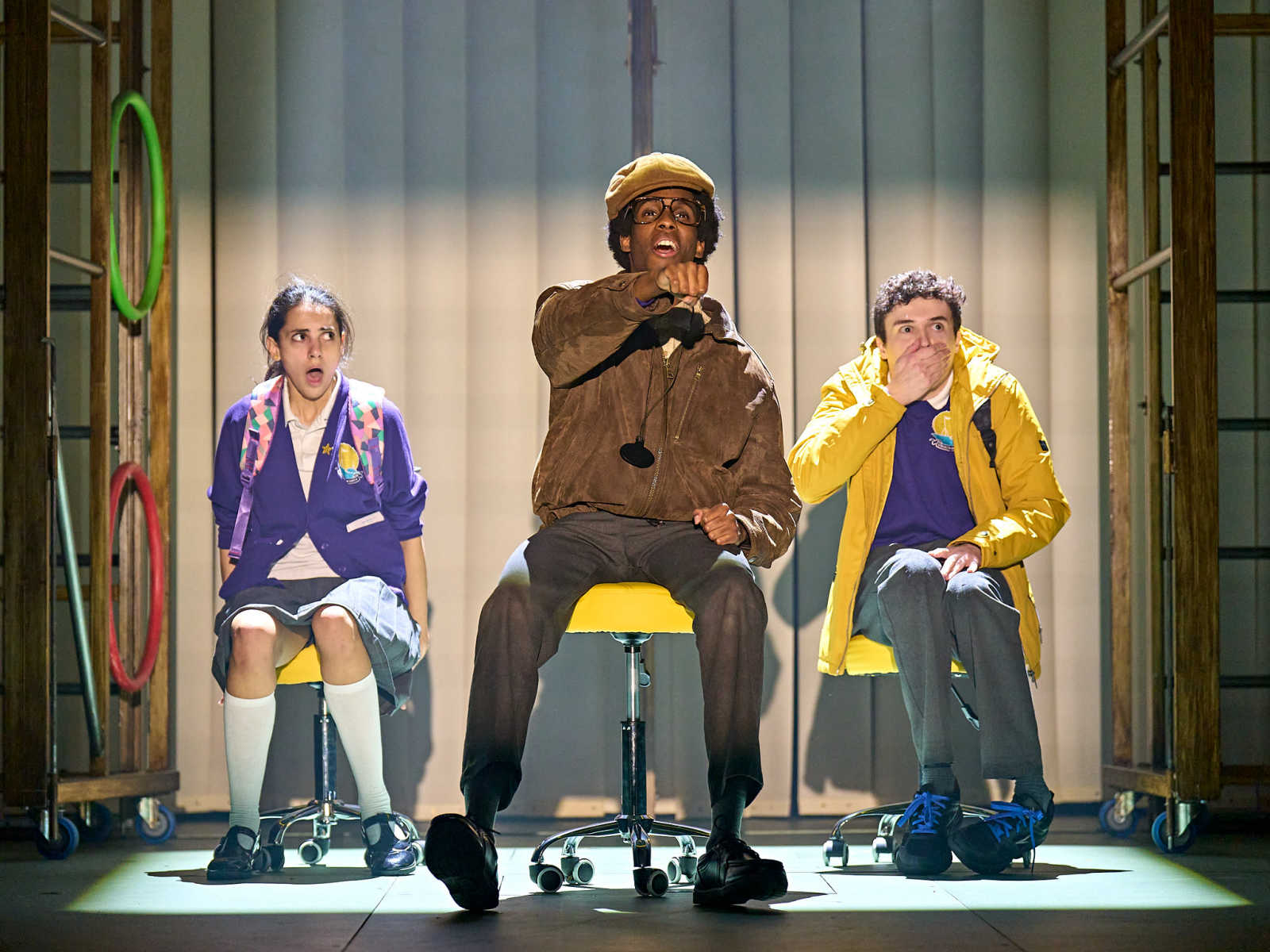
The set is designed by Lily Arnold and has an uncomplicated and functional feel to it. This allows us to engage our imagination and switch with ease from Alexa’s house, to the school gym, to Buckingham Palace, without ever stealing spotlight from the story itself. The main stage is that of the PE apparatus found in every primary school when I was growing up, and still in a few schools today. The big metal frame that included ropes, hoops, metal bars and rope ladders to climb may fill you with a fuzzy nostalgia and encourage your brain back to a time before the harshness of the outside world impacted it. It moved and folded to create new spaces, and the young audience bought into every element of its design.
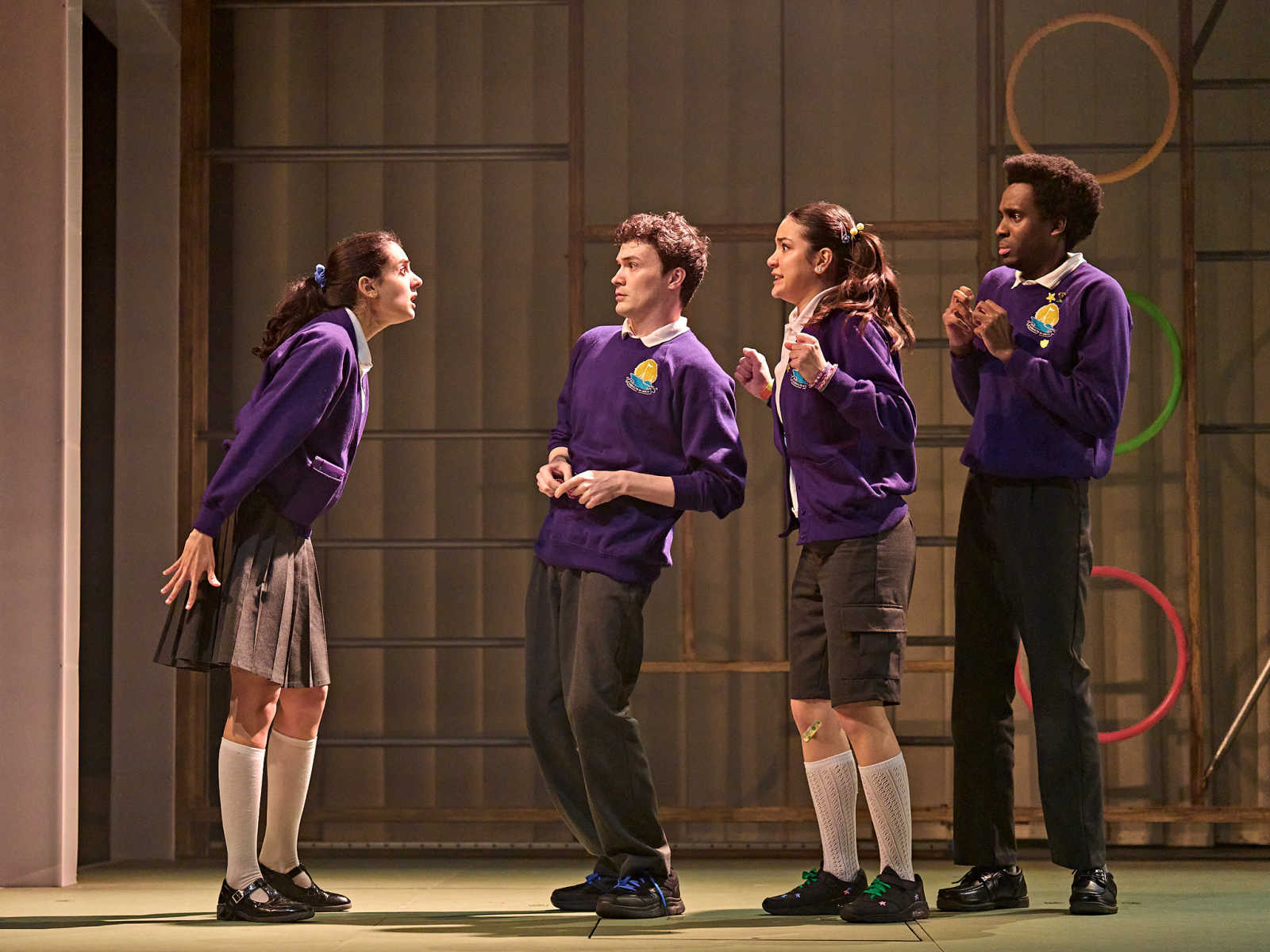
Farshid Rokey as Ahmet was incredibly powerful. His initial reluctance gave way to suppressed fear, rage, anger and hurt, then found its way to trust, friendship and hope. It was pitched just right and you felt everything he felt, right down to his disgust at being offered a sherbet lemon covered in fuzz and fluff! Sasha Desouza-Willock as Alexa was great at flipping between her child like status with her friends, and sharing the grown up feelings she had had to face regarding losing her dad. Her speeches direct to the audience drew us in as she took her time and allowed her words the space to breathe and sink in. Gordon Miller, Petra Joan-Athene, and Abdul-Malik Janneh were friends Tom, Josie and Michael and their work together created a great energy that kept the audiences attention throughout. Priya Davdra as Alexa’s mum and Mrs. Khan gave us two gorgeous characters, showing that adults can be a safe space, can listen, and will support even the craziest of ideas. Joe McNamara as Brendan the bully was clever as he wasn’t so vile with his performance that it became about him, but he still managed to get the point across and appear intimidating. Zoe Zak, Megan Grech and Adam Seridji complete this united cast and seamlessly switch between the various other roles needed.
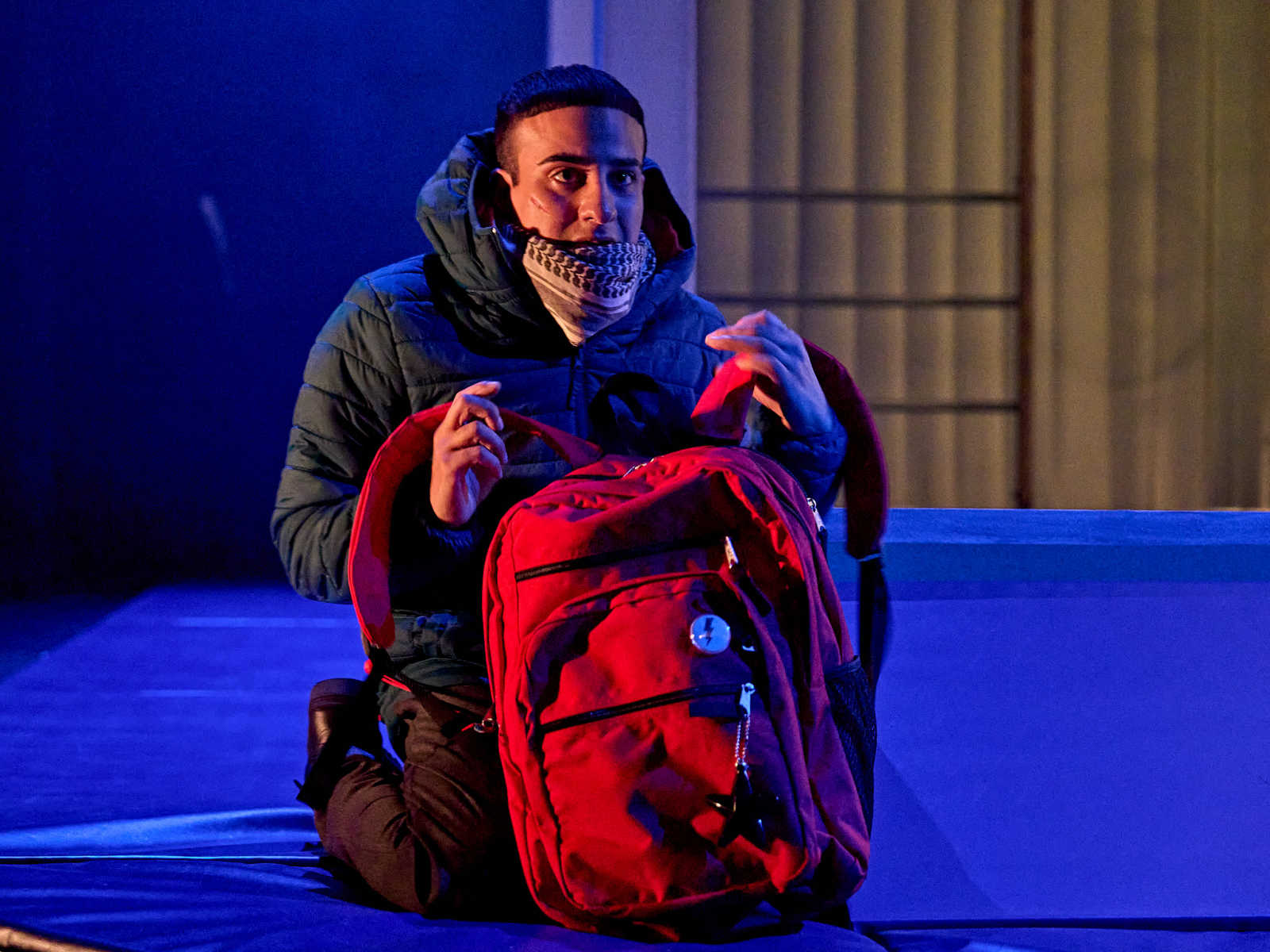
We only have to switch on the news, flick through social media, or listen to snippets of conversation wherever we go to be aware of turmoil and war. Children across the world are being displaced from their homes every day through no fault of their own, and so it is naïve to think our own children are blissfully unaware of this and that it doesn’t impact their world. It does. The Boy At The Back Of The Class not only gives them a voice, but it makes adults listen too. It celebrates courage, friendship, understanding and tolerance. It demonstrates that we can move forward by searching for the things that we have in common instead of fearing the things we don’t, and it does it all through a brilliantly charming, funny and endearing adventure, with just the right amount of mischief and cheekiness. Instead of avoiding tricky conversations with children, it welcomes them and highlights that like or it not, this is the reality of their world. Even though I knew how this story ended, I found myself caught unawares with the sudden emotion I felt by the way it was presented, and I will admit to shedding a tear or two. The audience were reeled in, and I hadn’t realised the collective built up tension until it was released in the final moments with cheers, gasps of relief and a couple of sobs from this admiring young audience. The Boy At The Back Of The Class reminds us that sometimes, we need to remember to view the world through the eyes of our children because we may just find that they can probably teach us a thing or two.
WE SCORE THE BOY AT THE BACK OF THE CLASS...






Most Popular Shows and Events in London




Moulin Rouge! The Musical
Piccadilly Theatre
Tue 28 Jul 2026 - Sat 16 Jan 2027










High School Musical
Troubadour Wembley Park
Mon 12 Oct 2026 - Sun 3 Jan 2027


Trainspotting The Musical
Theatre Royal Haymarket
Tue 28 Jul - Sat 5 Sep 2026